A Hill to Dine On
Deep in the forest of Northern California, halfway between Sacramento and Lake Tahoe, sat thirty strangers shoulder to shoulder. The sun dipped through the tall pines, outlining in gold the string of tables clustered tightly on the back deck of a small, unassuming home.
Maksim Guseynov, a middle-aged dad with thick glasses and a sturdy build, rose from one of the wooden chairs and bowed politely. His wife Julia stood in the doorway, her tired hands resting on the shoulders of her second youngest son wearing an apron. In one sweet moment she took it all in: Maks, the guests, and the fruit of days spent laboring in the kitchen, months spent saving up to buy ingredients, years spent hoping and dreaming, even when they’d lost nearly everything — including each other.
Maks was smiling too. He greeted the guests in his low, unhurried voice, then prayed for the food. All at once, six Guseynov children appeared through the doorway, sharply dressed, carrying baskets of fresh sourdough and plates of Borsch Perestroika — a deconstructed version of the soup every child of his generation would know intimately, its name borrowed from Gorbachev’s last attempt to save the Soviet Union.
His peers would be happy to never taste the dish again. Maks, however, had chosen to redeem it.
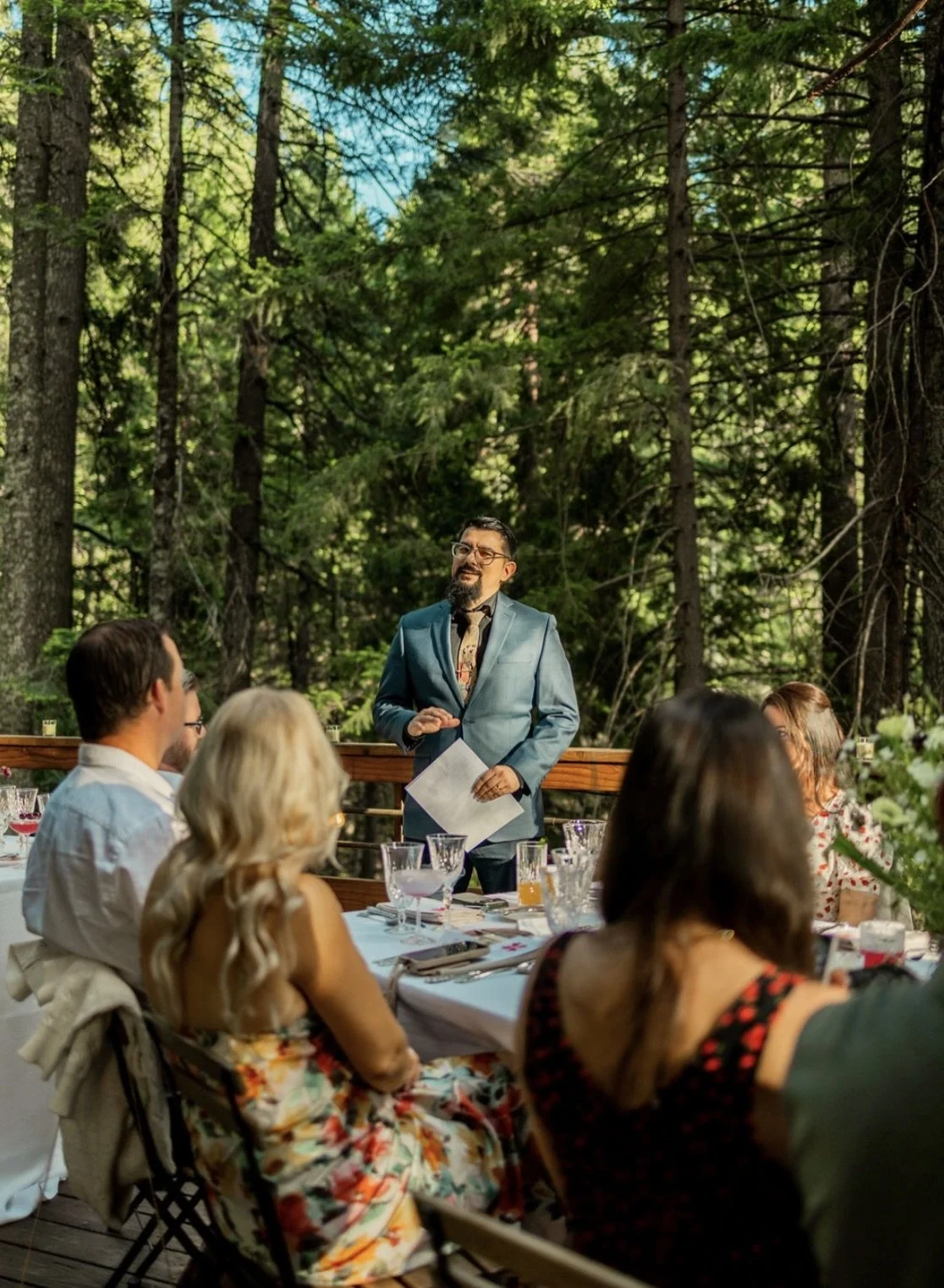
The Soviet welcome & prayer
He’d spent ten months perfecting the recipe. This was the story of his childhood, and of the Soviet Union his family fled as religious refugees after the collapse of communism. Every dish that night carried a history lesson inside it. Eastern European food is survival food, and Borsch was born from whatever remained in the cellar long past harvest, sustaining families through long winters.
Years earlier, Maks’ grandfather had walked out on his family. His eldest son, Maks’ father, was six years old. In her greatest hour of need, Maks’ grandmother Valentina made a promise to God: if He’d take care of her children, she’d spend the rest of her life serving Him. Through years of immense hardship and famine, neighbors and friends brought food and help to her door. It was always just enough.
In 1998, when he was nine, Maks and his family — including Valentina — fled the shambles of their homeland for a new home, Sacramento, California. Arriving in America at age sixty-six, Valentina became a masseuse, offering her service to weary working-class families and tired mothers of her community. She charged $10 an hour, and sent every dollar she could to missionaries back in Ukraine. In time, Valentina also found a missionary in Azerbaijan to reach the man and relatives who’d abandoned her years before. She made up her mind at once to send money to support their efforts to help him and his Muslim family. This carried on for years.
All the while, invisible seeds were being sown deep in her grandson. But like a pine cone, they would need fire before they could open.
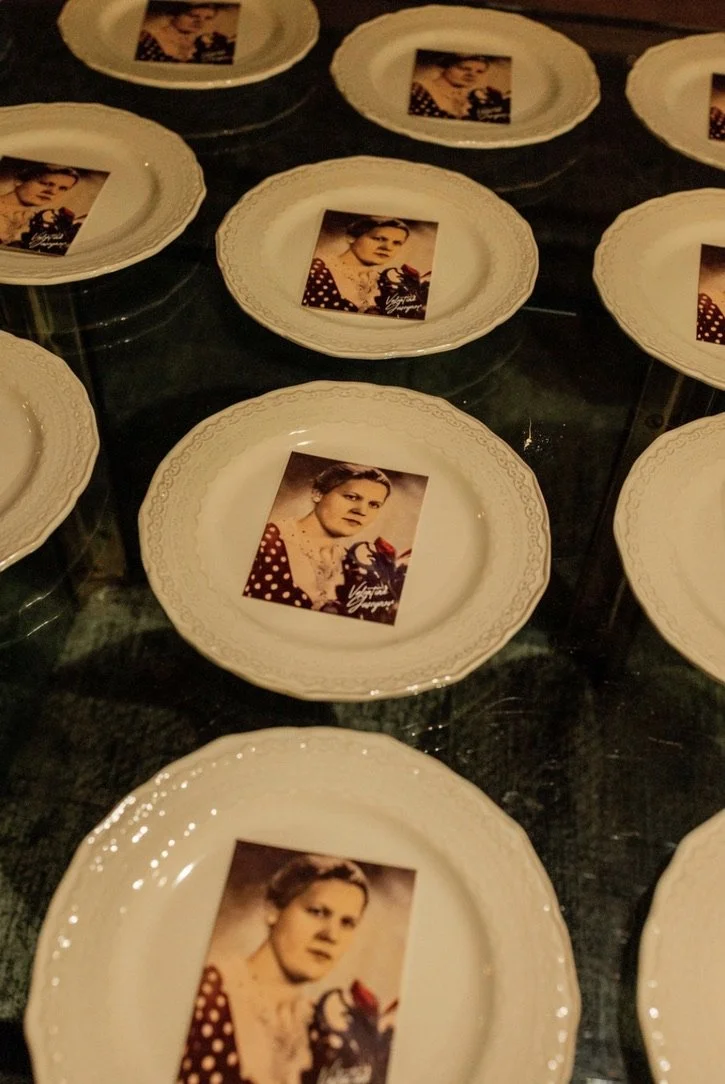
Dessert plates with vintage images of Valentina
Shortly after moving to the free world, Maks met Julia, a fellow Ukranian refugee, in church. They were ten and eight at the time, and years later would marry. The wound his grandfather had left, and the undaunted love his grandmother had answered it with, shaped them profoundly. They adopted three parentless children, and had three more of their own. Maks collected and restored vintage items on the side to supplement his sales job salary and make ends meet. Julia nurtured her lifelong love of cooking and used whatever ingredients she had and every meal she prepared as an opportunity to hone her craft.
But life hit them all at once.
Just six months pregnant with their sixth child, Julia suddenly went into labor. Maks rushed her to the hospital, but by the time they arrived she was drifting in and out of consciousness. The doctors performed an emergency procedure and the baby was born, un-breathing. Julia and Isaiah laid five feet apart, being resuscitated on separate operating tables. Maks stood outside the operating room window and prayed fervently as he watched the doctors work on his dying wife and child. Then slowly, Isaiah turned pink and began to breathe. Julia hemorrhaged, and as a last resort, the doctors gave her an emergency transfusion. Her body rejected it, triggering a condition she would battle for years. But she lived. And so did Isaiah.
During this time, Maks had to quit his job to care for his wife and the kids. Their finances already stretched paper thin before all this happened, they found themselves almost entirely dependent on the generosity of others. Friends appeared with meals, money, prayers, and practical help. A month after the birth, mother and son were finally allowed to go home. But just two weeks later, a sheriff deputy knocked on the door and ordered immediate evacuation. The largest wildfire in California’s history — the Caldor blaze — was headed straight towards their small town. The Guseynovs hastily packed a handful of necessities and drove south to family who took them in.
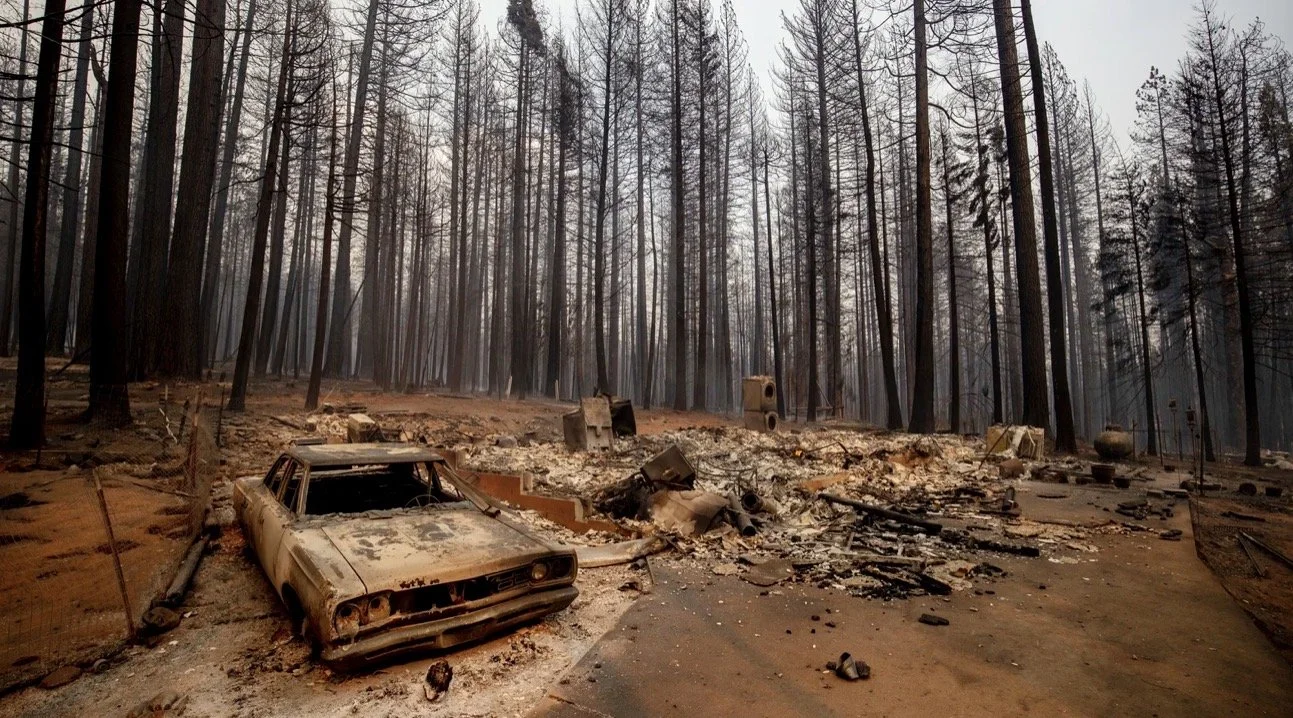
A vehicle and property destroyed by the Caldor Fire in Grizzly Flats, California — credit Ethan Swope/AP
Perhaps the most traumatic incident, however, was yet to come. Two years after the fire, the family was in southern California taking a much needed vacation. Three days into the trip, staying on the fourth floor of an apartment building, Maks suddenly heard his eldest daughter scream from the bedroom with a sound no parent should ever hear. He ran through the door and saw her standing by a busted open window. Their two-year-old son Isaiah had pried through a faulty window stopper. He was gone. Less than a minute later, Maks was downstairs, numb and completely unprepared to face the worst moment of his life.
The boy was seated on his bottom next to a bush, eyes wide, only a minor scrape and nosebleed giving away the fact anything at all had happened. Minutes later, dozens of emergency vehicles and medical personnel swarmed around them. They loaded him into an ambulance and rushed him to a waiting helicopter. Maks and the boy took off headed to San Diego’s best trauma hospital, but twice, due to unusually thick fog, the helicopter had to make emergency landings — the second time for good in a high school football field. They boarded another ambulance the rest of the way to the hospital, where a team was waiting. The fact the boy was even alive was alarming enough, but twenty minutes later, after a full examination, the doctors were dumbfounded. No broken bones, no signs of trauma. Fifty minutes after falling forty-five feet from a window, the boy was cleared and released.
Two hours later he was back on the beach with his siblings, sucking a lollipop.
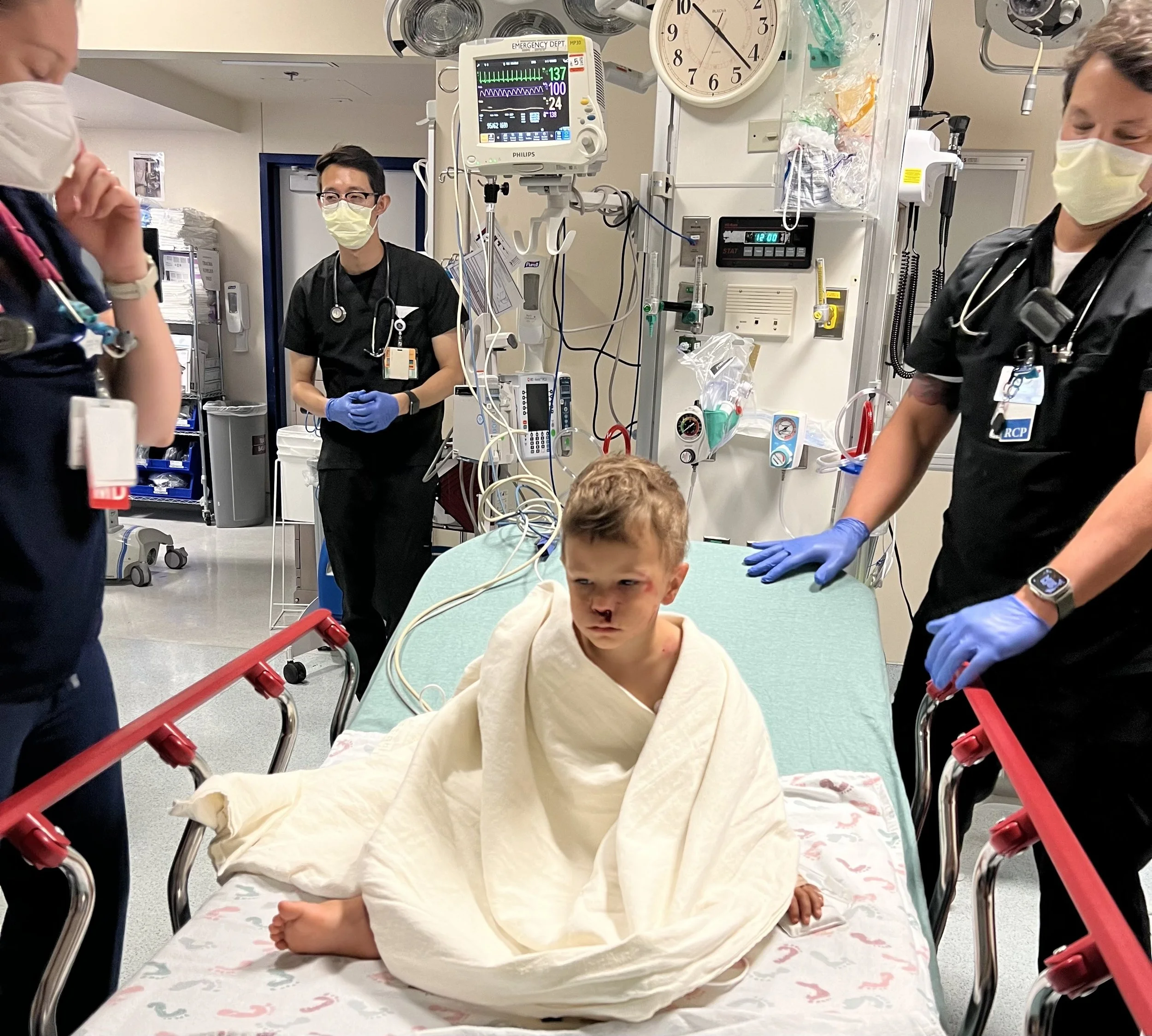
Isaiah, an hour after the 45-foot fall
When they reviewed security camera footage from the building, they found the answer. The boy had fallen directly onto a small, miraculously placed bush, which cushioned, flipped, and landed him upright.
Both parents would carry the weight of that afternoon long after the boy had forgotten all about it. But something else came from it. Maks made his own covenant with God: if he was ever in the position to carry another family through hardship, he would consider it his greatest privilege.
As life steadied, they began to dream. Julia loved fine dining, and Maks loved history and storytelling. They knew they’d never financially survive trying to start a restaurant, but even if they could, it would pull them away from the family they were trying so hard to build. That’s when the idea struck: instead of opening a restaurant, what if they opened their home? Instead of hosting these dinners for their own profit, they would host them for others in need.
Then the world shut down. Like everyone else, Maks had a choice to make: spend his life dying on any number of hills — politics, outrage, fear, tribalism, endless arguments — or simply ask: what has God already placed in front of me?
Then and there, he made up his mind to stop fighting battles he could never win. And so in 2021, A Hill to Dine On was born, messy but breathing.
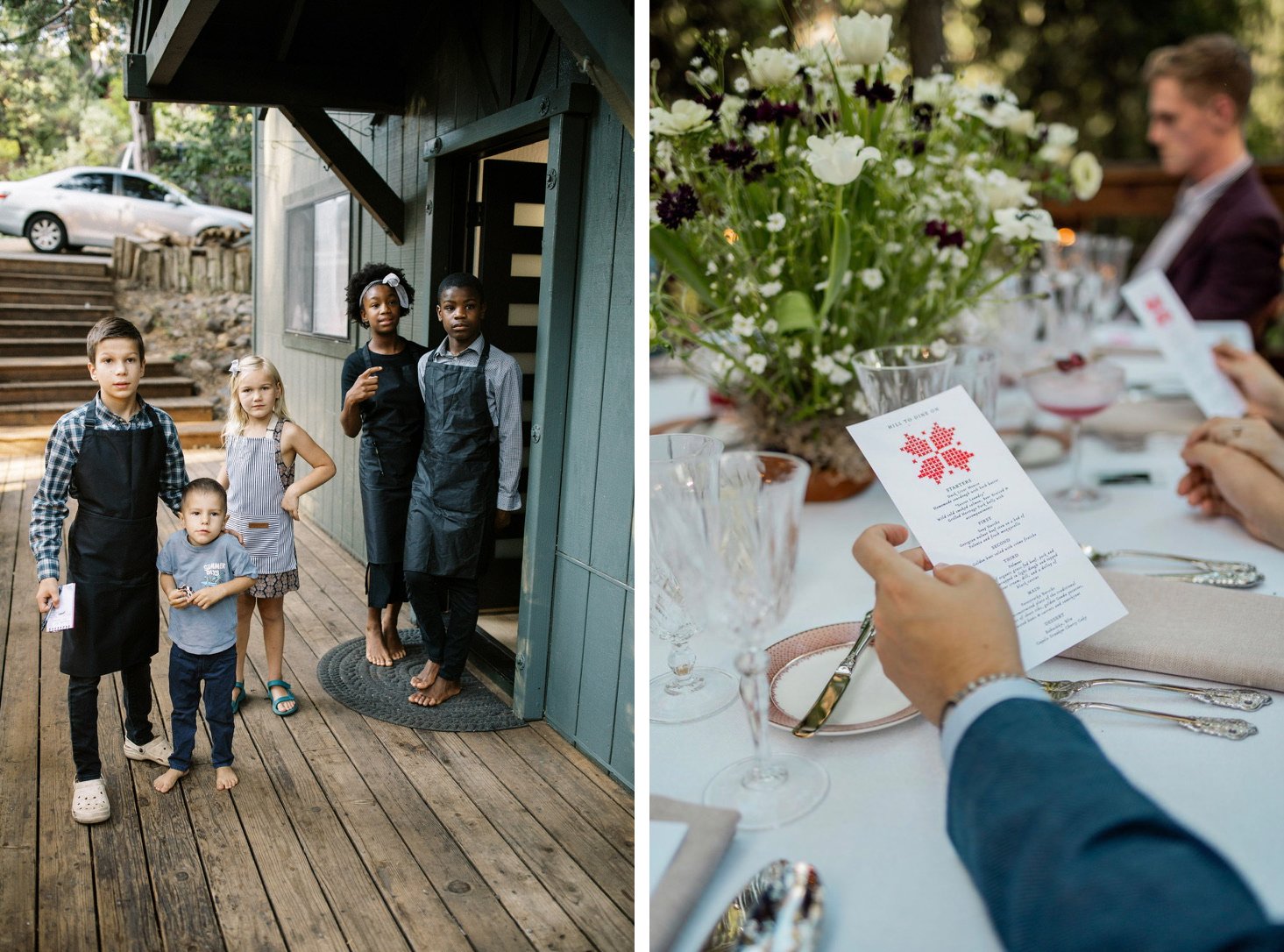
The waitstaff, after their first dinner service / Hand-embroidered menus
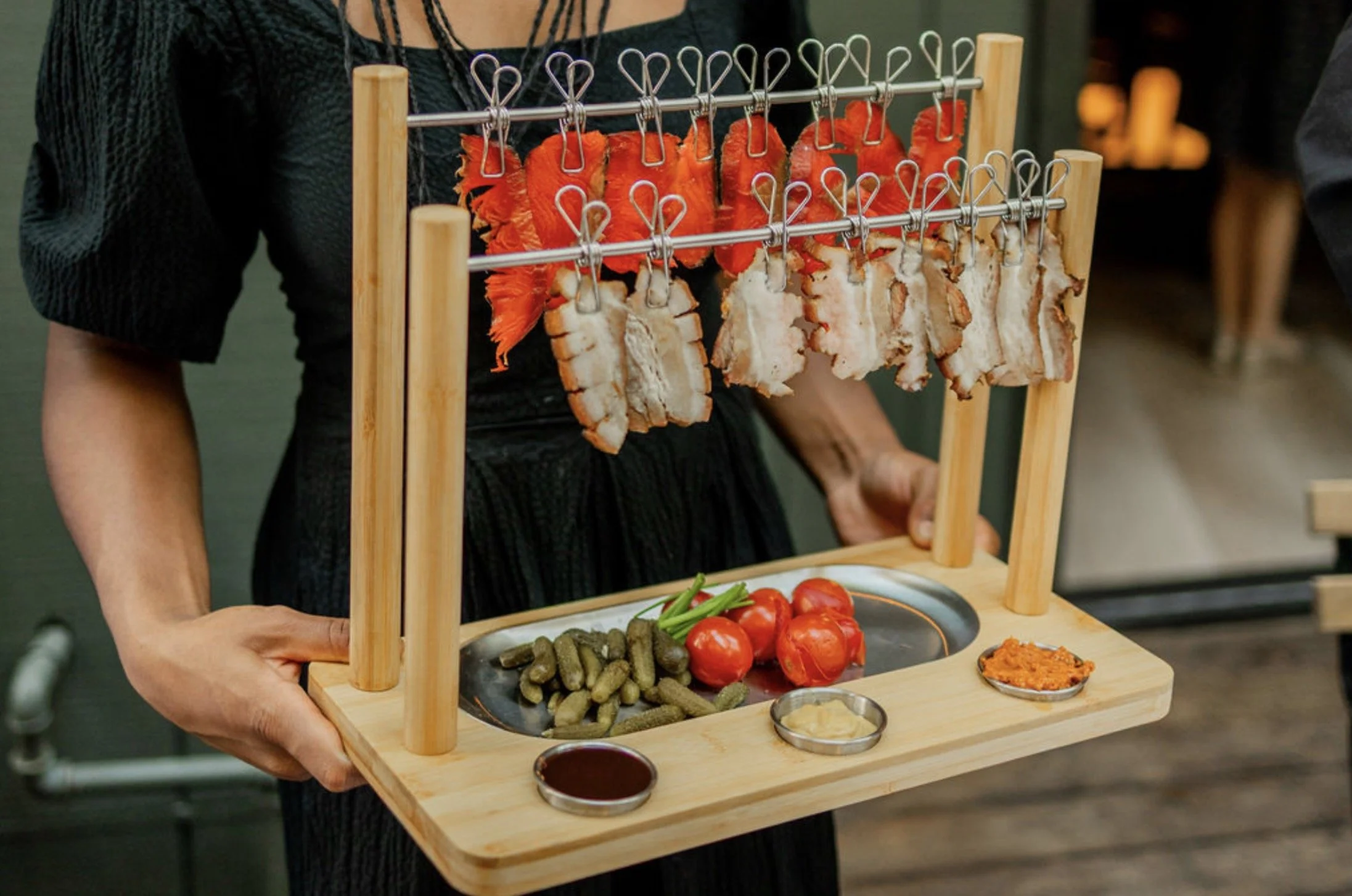
“Soviet Laundry” — wild cold smoked salmon and Salo, course 2 of 7 from the Soviet dinner
The Guseynov family has since hosted almost a dozen charity events, including three of their flagship dinners: one French, one Japanese, and their magnum opus to date — the Soviet special.
The dinners are anything but easy. They take months of preparation and planning, and no detail is left to chance. For example, each menu card for the most recent dinner took ninety minutes to hand embroider in the same Ukrainian cross-stitch pattern Valentina's generation carried out of the Soviet Union — all thirty of them stitched by a church member and her family, on a camping trip.
Last year, a record snow fell the entire week of March leading up to the pre-scheduled Japanese dinner. Maks and his boys shoveled no less than 15,000 pounds of snow from their porch and pathways, managed a 4-day power outage, then shuttled guests thirty miles each way in their trusty Toyota Land Cruiser since the roads were impassable for inexperienced snow drivers and cars. He told me he was lucky to get three hours of sleep a night that week.
Invites are passed friend to friend. No hype or hoopla.
Every member of the family carries a vital role, their unique creative gifts intertwining to present the highest-possible, Michelin-star-worthy menu and service right from their own kitchen. It’s an experience guests would gladly pay hundreds of dollars for. To date, they’ve raised over $100,000 for families going through acute trials, including a child’s heart transplant, exorbitant birth expenses, and treatments for a paralyzed little boy, whose family’s insurance fell short. Maks weaves the needs they’re raising funds for into the historical tidbits he serves with each dish.
—
This spring evening on the back deck, while he tells of his family’s final years in Ukraine — the hunger, uncertainty, border crossings, and hope — the guests savor tender strips of wild salmon he’s seasoned and cold-smoked using a family recipe carefully passed down across two continents and three generations.
The seeds Valentina planted over a lifetime have finally opened.
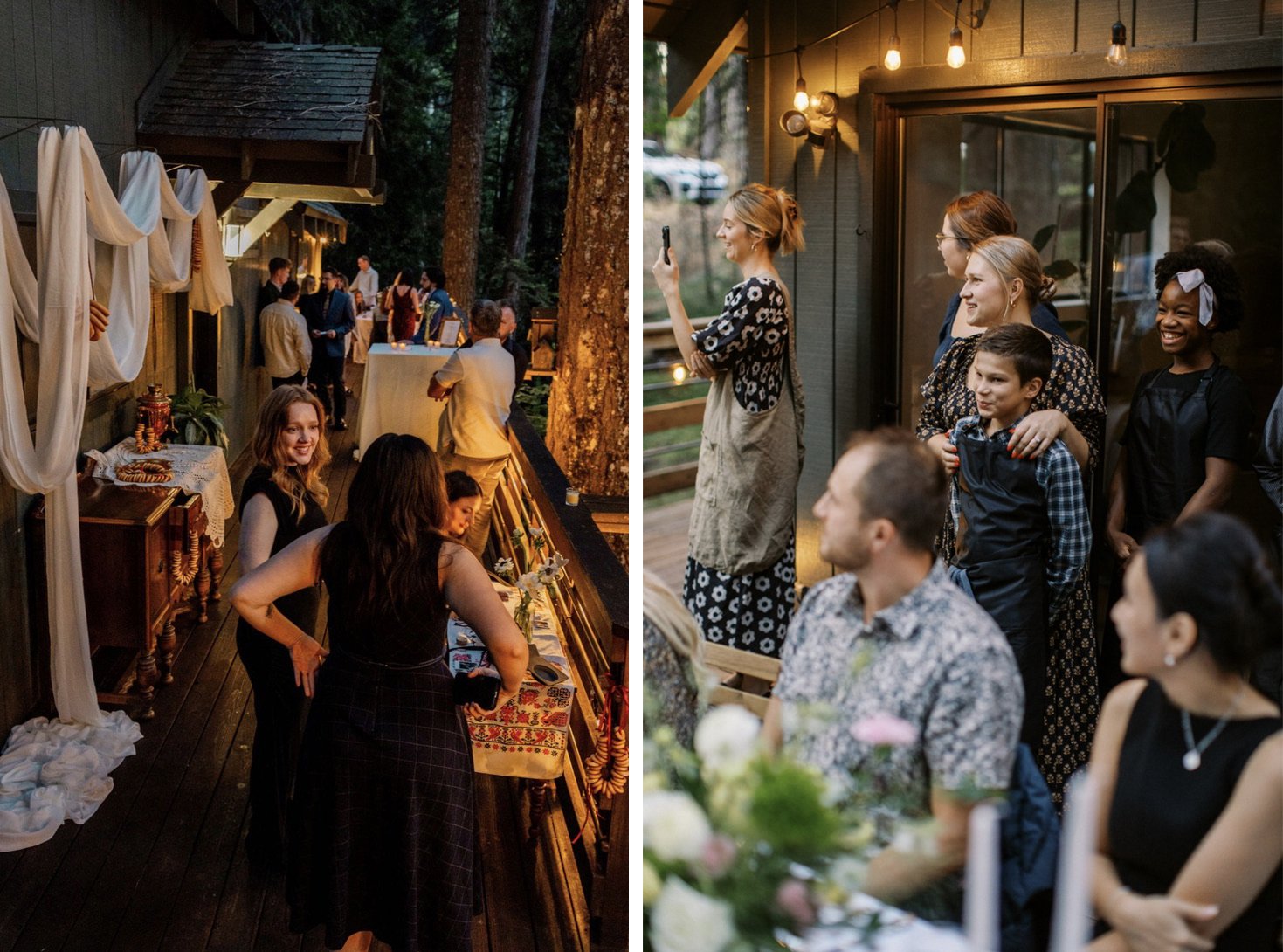
Back porch, post-service vibes / Julia and their children, taking a moment to breathe, post-service
After the food has been served, the dishes cleared away, and laughter and tears intertwined with rich conversation, stars appear. Maks stands again, his wife and children gathered around him, to thank each guest for their generosity, and for making the journey to be there. Most had arrived strangers, some from thousands of miles away. They are leaving friends.
The candles have burned low, but no one is in a hurry. The children bring out a final course: simple cherry crepes they’ve affectionately called Babushka, Blin — made the day before by none other than 94-year-old Valentina, the woman who started all this, decades ago in Ukraine, with just a vow and the determination to keep it. She still has that bright, unquenchable smile on her face.
Maks tells me that among her beloved community of Ukrainian refugees, she’s a bit of a celebrity. Nearly everyone knows her, and most have received one of her massages. She’s still giving them, and the price hasn’t changed in nearly forty years: ten dollars even.
And every dollar is still sent back to Ukraine — to help those who need it more than she does.
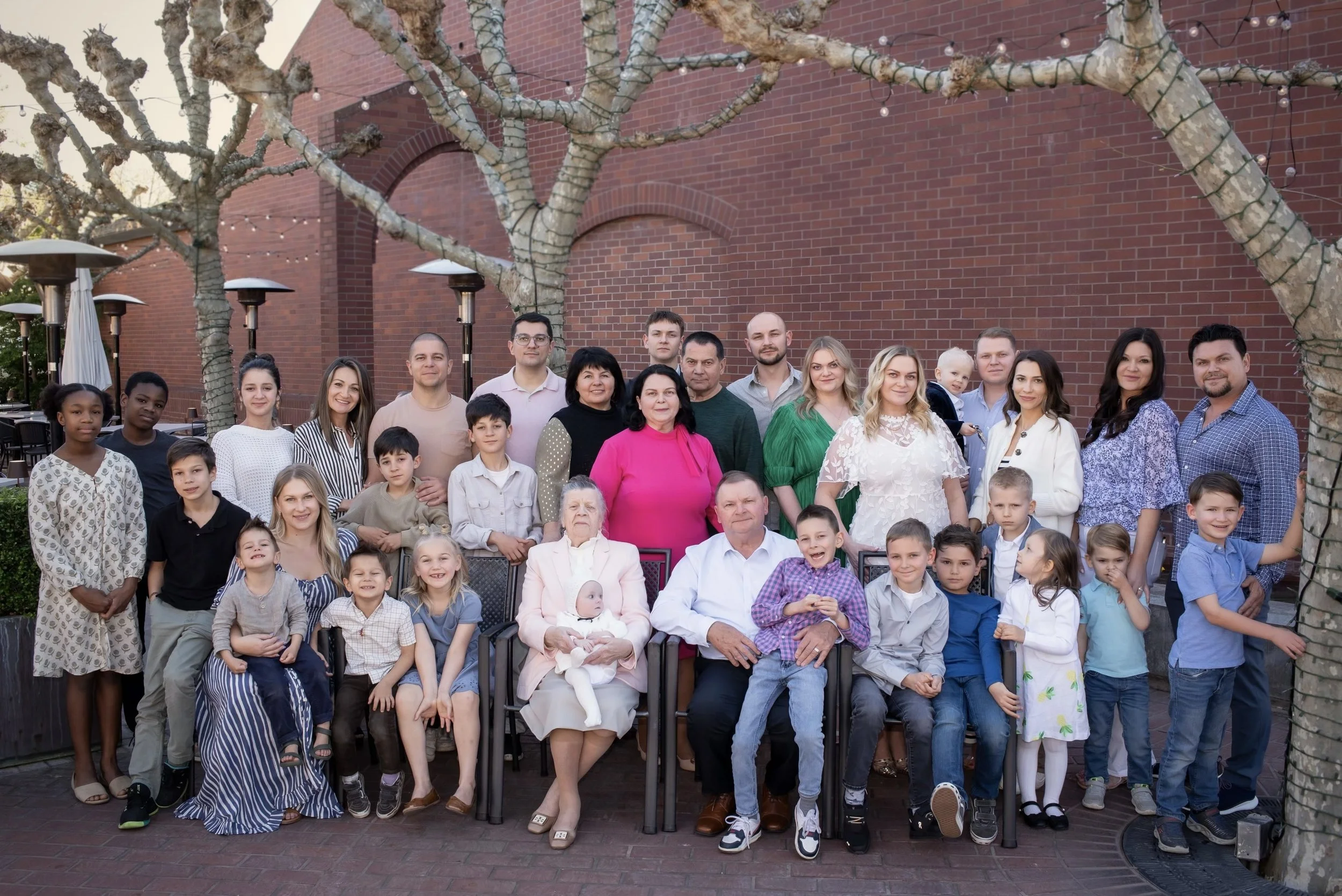
Valentina Guseynov and her progeny
—
Maks and I had followed each other for a couple years without ever speaking. A few weeks ago, I received a message out of the blue with the preview of this little video a guest made from the most recent dinner. I called him up on the spot — the first time we’d ever talked. And there I sat on the deck of The Nook, two days before we would leave our home for three months of mission service in Mexico. For two hours I barely said a word. As the call drew to an end, his words, spoken with the same undaunted radiance of his grandmother, gripped me: “There’s no waste in suffering, if it can become a tool to help someone else. In God’s kingdom, the way up is down.”
—
If you’d like to keep up with the Guseynov family, follow Maks, Julia, and the dinners on Instagram. (Helen and I are actively planning to attend one with my parents — hopefully soon!)
All photos courtesy of Maksim Guseynov. Photo credits to Angie Francisco, unless otherwise noted.