Contending with CAVE people :)
A couple weeks ago, while I was in Georgia, I met a couple from Florida, Dave and Suzanne. We hit it off instantly.
They told me about one of their projects: 6,000 acres they’d recently acquired in upper east Tennessee, where they’re developing a residential mountaintop community. I was intrigued by their vision, and they seemed interested in my perspective, so they invited me out. As it happened, I was already planning a trip an hour from their place a week later for the wedding of a dear friend, and offered to stop by.
A few nights ago, Helen and I found ourselves at the end of a narrow gravel road in rural Appalachia, littered with rural Appalachian features including rusted mobile homes and yards landscaped with beer cans. Dave gave me the gate code over the phone, and a small wooden gate slowly ushered us through the portal.
Almost immediately, everything changed.
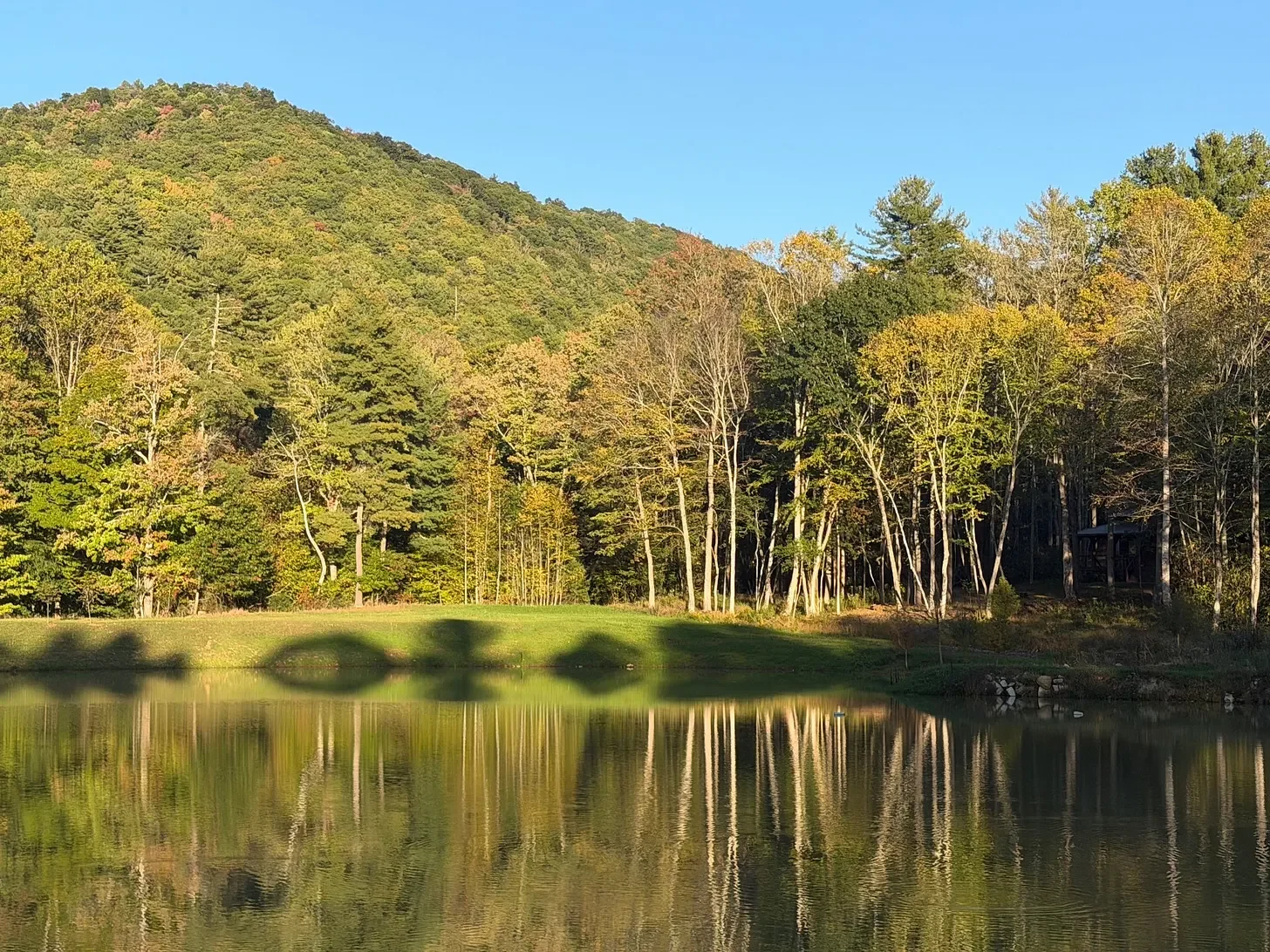
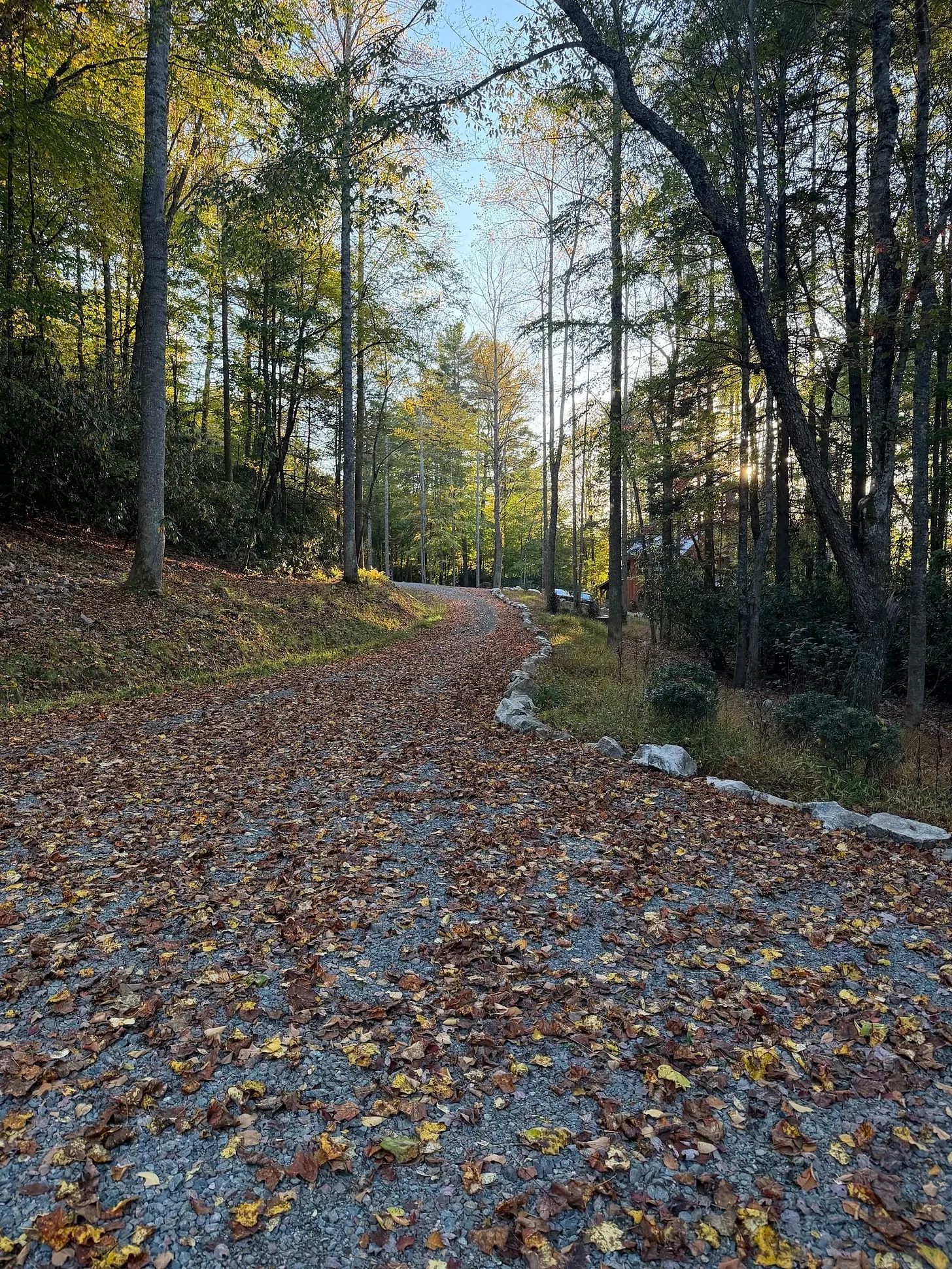
A pristine mountain backdrop reflected in a small lake. Split-rail fence wound along the driveway up toward a beautiful log cabin tucked into the edge of the trees. Dave met us on the road with his enormous smile, as if we were his own family.
That evening we ate an incredible dinner by the fire overlooking a picturesque slice of Tennessee that happens to be just a tiny corner of property.
Matt and Morag were the chefs, Dave’s right-hand couple, who moved there a year and a half ago as his hands and feet on the mountain when he’s away. They previously managed luxury yacht experiences around the world, but after meeting Dave and Suzanne several years ago, they left that world behind to work alongside them.
Next morning, after lodging in one of the cabins they’ve built in just a year of being here, I got the full tour. We criss-crossed multiple peaks, up and down thousands of feet across the enormous acreage.
Dave has hired one of the world’s foremost land-planning and architecture firms to help shape the site plan, and he has put an extraordinary amount of thought into the vision for Forge Mountain Club.
He believes, as do I, that nature is the environment humans are meant to inhabit. So instead of maximizing the number of homes that can be squeezed onto the land (and the $$ at the bottom of his spreadsheet), he’s carefully planning modest homes that disappear as much as possible into the trees, leaving at least ~60% of the mountain permanently untouched.
He and Matt and Morag have already built strong relationships with many of the locals in the surrounding communities, employing them across all parts of construction and land improvement.
Ten minutes down the road, they’re purchasing another 1,200 acres, including a neglected 1980s golf course they plan to reimagine. They’ve also purchased a marina at a beautiful lake not far away.
Dave’s dream is to have a network of places and experiences where multi-generational families like his own can live in nature, tread lightly, breathe clean air, enjoy different activities, and - most importantly - reconnect with one another. There’s a longer, beautiful story behind all of this, but suffice it to say this is all very personal to Dave’s own story and family, and the healing power they found being together in nature.
As ambitious as all of this sounds, Dave’s approach is actually quite conservative compared with what could be done with land like this, which was for sale on the open market and likely would’ve been snatched up by more traditional developers.
If a traditional developer were getting hold of 6,000 gorgeous acres, you can only imagine what would happen: thousands of generic homes, indiscriminately placed, streets carved all through the landscape, utility lines everywhere, giant lawns, a few golf courses bulldozed out of the forest, and little thought given to any of how it actually looks or feels to inhabit, let alone the natural beauty it sits within.
But when I posted a short interview with Dave from the top of the mountain, you can imagine at least some of the response:
"He's destroying an entire mountain?!"
"Send him back to Florida."
"We don't want that here!"
I get it. Developers are largely responsible for the bad rap they’ve earned. For most of the past century, American cities and the rural communities surrounding them have become more and more a giant parking lot, sprawling concrete, asphalt, cookie-cutter homes, strip malls, out of touch resorts, and a whole lot of uninspired architecture. Nature has suffered. People have suffered. And ultimately, many of the developers themselves have suffered.
Turns out that following the bottom line without looking further than the end of your nose isn’t the best strategy after all.
At the same time, everyone knows we need more housing. Housing un-affordability dominates headlines for a reason. All of us young people trying to buy a first home feel the pain firsthand.
So how do we reconcile these realities and actually solve these problems?
We need developers. Developers who care, with taste, with restraint, with a long-term vision. Willing to go against the grain, preserve what ought to be preserved, and build things that may be a whole lot less optimized for an investor’s spreadsheet but far better for human life and the environment.
But what if doing the right thing - for the land and for the people who’ll inhabit it - also turns out to be the better business decision in the long run?
And sometimes the long run isn’t that long.
This applies whether you’re biting off 10,000 acres, a tiny old town (wait till I tell you about the town I’m writing from right now!), or simply buying a rotting 120-year-old train car and restoring it instead of letting it disappear - saving a piece of history while also creating a livelihood for your family and an asset for your community.
Last week, I wrote about Serenbe.
It is one of the most inspiring places I’ve ever seen: a collection of villages spread across 2,000 acres outside Atlanta, with homes, shops, farms, trails, schools, and businesses woven into an extraordinary natural setting.
The incredible thing is that the majority of the land (70%) remains permanently protected as green space, while development is concentrated into compact, walkable hamlets.
Steve Nygren, the founder, took his fair share of hits before he was able to convince governments, neighbors, and lenders that an entirely different model of development was possible. The irony is that Serenbe started twenty-five years ago when Steve heard the sound of bulldozers clear-cutting the forest behind his property 40 minutes from downtown Atlanta, and realized the city was unstoppable. He rallied together 600 landowners to self-determine what would happen to the 60,000 acres they collectively owned.
Today, Serenbe has become one of the most influential examples of great place-making - a new, old way of development - in America and the world.
Steve is a true pioneer. And it was there at Serenbe a couple weeks ago that Dave, Suzanne, and I met. We were both drawn to this man’s values and experiences in creating places like this.
—
The NIMBY’s will always be there.
So will the CAVE people (citizens against virtually everything).
I actually somewhat appreciate their negativity on social media - it seems to help fuel the virality of some of these posts.
But underneath the sarcasm, I believe we have a pretty big storytelling and education problem around the right kind of development. Most ordinary people have almost no vocabulary or awareness for distinguishing good development from bad. And there’s a whole lot of bad.
I want to help change that. Partly by building places myself, but also by telling the stories like Dave and Suzanne, Steve Nygren, our community’s efforts in Deary and in Waco and beyond, and many others who are proving that development can be beautiful stewardship of creation rather than extraction.
For me, the goal is actually quite simple: create places where humans and families flourish, where nature is honored and protected, and where different forms of life can coexist beautifully.
We cannot afford to be dogmatically anti-development. People need homes and communities need local economies. The question isn’t whether development will happen. The question is what kind.
We should celebrate the developers doing what’s good and beautiful, while demanding more of those who don’t.
I believe we can be environmentalists AND capitalists.
Beauty-lovers AND smart businesspeople
Builders AND conversationists.
I want as many people as possible to experience nature as I have known it, community as I have lived it, and places that communicate care and beauty in every detail.
That's a mission worth celebrating, and thankfully, despite the comments section, there are a lot of other level-headed locals who seem to believe the same thing in my experience.
This is only a small window into the tension I live and breathe daily, but I love it.
Through building better places and telling better stories, I believe we can shift the entire narrative around development - and advance a movement toward stewarding creation honorably and living in beautiful, humane places, whether that’s on top of a mountain, in a tiny restored town, or in the heart of New York City.