Half A Lifetime Later
Farmers’ markets, when done right, are some of the most magical places on earth.
A bunch of farmers and artists, bakers and musicians, fresh sourdough and ripe fruit, espresso, old buildings, and the marvelous chaos of people bumping into one another. Oh, and plenty of noisy, messy, wonderful children.
Art, commerce, and community, all in one place.
What’s not to love?
But since moving to Texas seven years ago, I’ve hardly been to a farmers’ market. I’m sorry, no offense, but Waco’s version is no match for the one I grew up going to and selling at - in a sleepy town roughly a tenth the size of Waco up in the Idaho panhandle. The college town of Moscow.
I miss those summer and fall Saturdays between the ages of fourteen and eighteen. I spent Monday through Friday gutting it out on construction job sites, dreaming about Saturday morning, when I’d get up at five-thirty and pack for market.
Once a week May through October, the market takes over leafy main street for several blocks. Friendship Square sits at the center, with kids splashing in water fountains, parents sitting on shaded benches. A few hundred locals pull wagons, push strollers, and ride bicycles from the neighborhoods around town down the crowded car-free street.
Beyond the fond memories, I owe a lot to that street for an education in making things and selling them.
cheese, popsicles, soda
I was fourteen when my mom and I started making brie, camembert, and yogurt with leftover milk from our beloved first jersey cow Bluebell, and we needed an outlet. That first year we drove all over the place, selling wherever we could get a foot in the door. Moscow main street on Saturday mornings, Coeur d’ Alene on Wednesday evenings (a 2-hour drive north), Hayden every other Saturday I think it was, and the indoor winter market at the 1912 Center.
With the encouragement of locals consistently buying our table clean, we expanded our experiments to include one-year-aged Gruyère, cloth-bound cheddar, and my one and only original hit: Orchard Blue. Every day for months, I’d wash each wheel with our own apple cider, pressed from fruit picked a stone’s throw from the “creamery” shed next to our home. Slowly, the wheels turned a delicious amber hue, and by the next spring the inside was pale golden, crumbly and lusciously creamy from Bluebell’s rich milk. The flavor was wonderfully complicated, classic jazzy blue notes mixing with a punch of cider reminding you of September’s harvest and the change of the seasons.
Our faithful customers bought us out Saturday after Saturday.
Then came the popsicles, followed by the soda company. Home-brewed root beer and citrus soda sold from an antique galvanized wash tub filled with ice. The details of that enterprise, including a bit about the explosions we (and a handful of customers) endured, were documented in this short piece.
Not every venture survived, but a few bucks of profit were put in my pocket, and each added a brick to my entrepreneurial education.
When I think back on those days, I have to smile.
I also have a lump in my throat remembering my friend Nels.
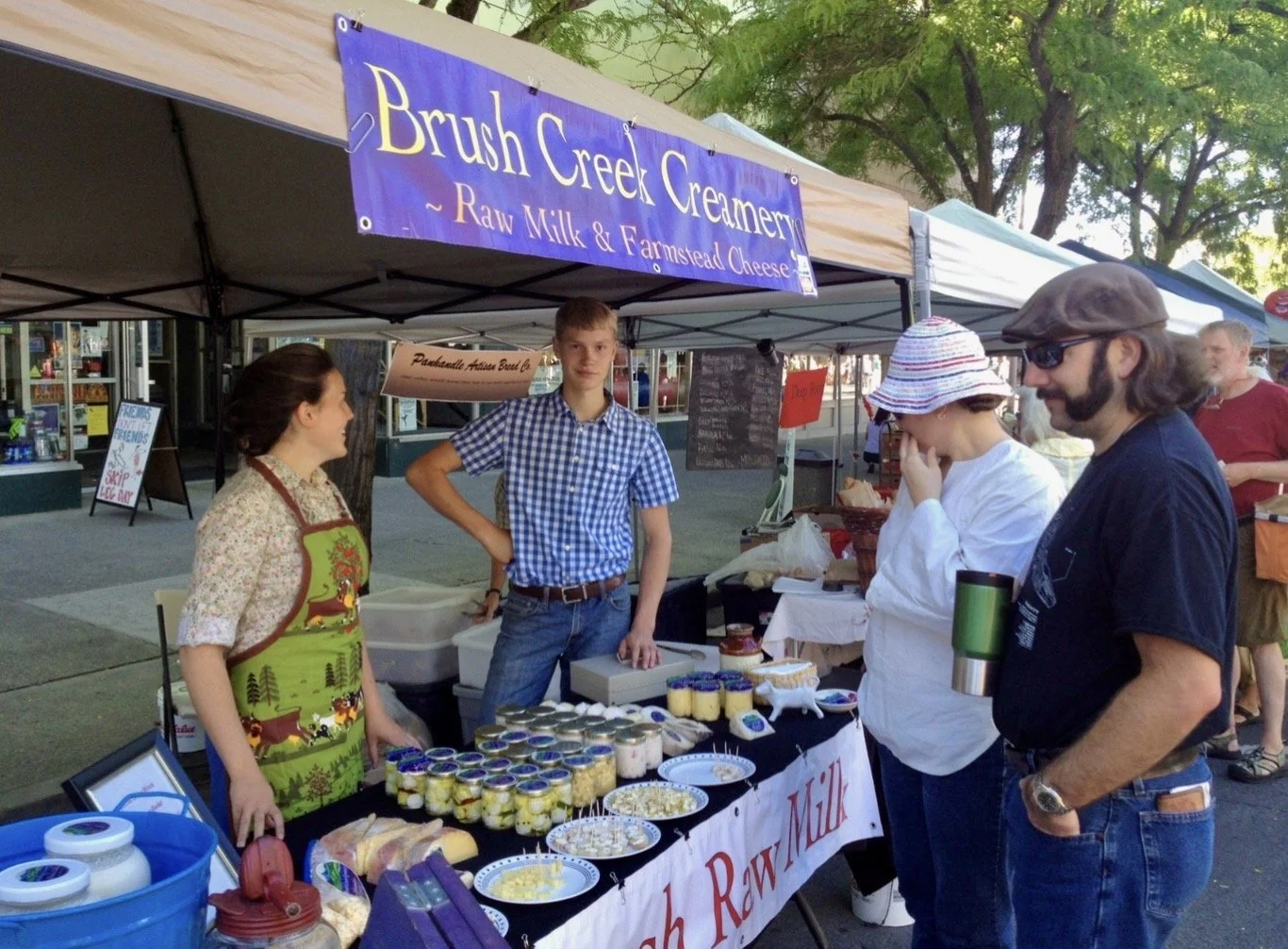
For years, he occupied the tent next to ours. His sourdough was out of this world: fresh and tart, moist and chewy. The almond croissants, melting immediately upon entry to the mouth, were a close second. We’d joke with each other between customers and talk culture, politics, religion, and food each week. At the end of the market we’d always barter bread for cheese, cheese for bread. It was a match meant to be.
Nels passed away from cancer a little while after I stopped going to farmers market. He made my life - and all who knew him - richer.
I miss him, and I miss that place.
I wish I could taste a little bit of that here in the middle of this long trip to the desert.
And I did.
the mennonite, mexican market
Saturday morning, we awoke to beautiful weather. Helen suggested we take the boys to the farmers’ market - which I had no idea existed before this suggestion.
A little while later, we pulled off the crowded, industrial main road known as “the corridor” onto a side street, then into a field at the edge of an apple orchard, the trees loaded with fruit only a couple weeks from picking. I was startled by the number of cars parked.
In this stage of parenthood, I often forget that it takes about three times longer to fully unload the crew than I seem to remember, so each time I wander off holding Lucas’ hand, then realize we’re alone and run back to the car to check on progress.
Once logistics had been handled, we all walked together towards the small river. A long arched bridge crosses it, emptying you right into the market, set up in the grass under huge trees. I planned to spend a few minutes there, getting the kids some fresh air.
Just when we got to the good stuff, Benjamin decided it was time to nurse, so he took Helen back to the car for a while.
That left Lucas and Ezra with me, and like everywhere else we go these days, I got to see the market a bit from their eyes. They shrieked and laughed and begged and grabbed nearly everywhere we went. Handmade swings, bouncy balls, elote cups, grape juice and nuts. Mucho pesos were spent.
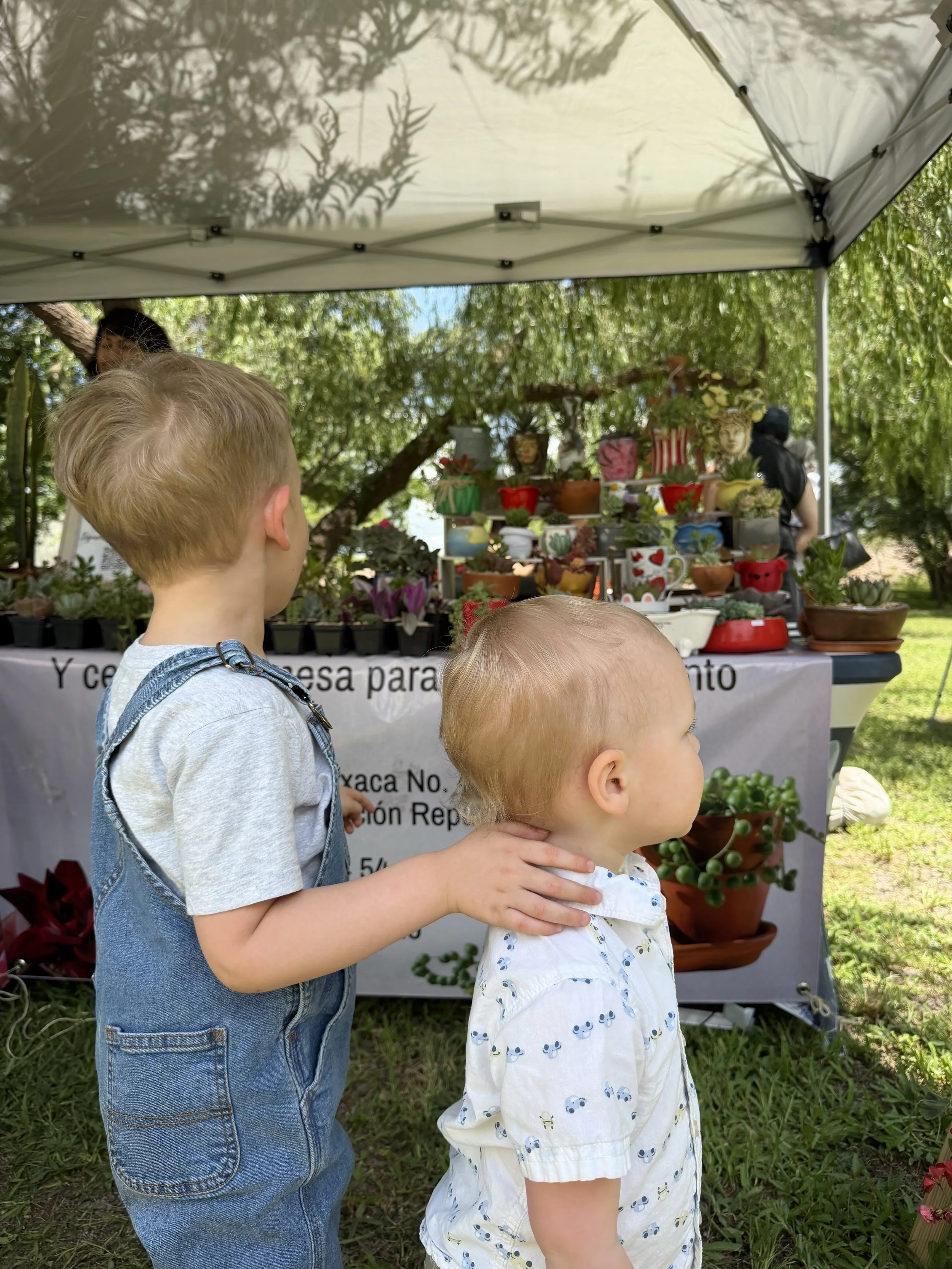
I even found a sourdough baker. Fresh and tart, moist and chewy. Nels would’ve approved of her crumb. (Of course he would, he was always lifting others up).
After an hour which felt like fifteen minutes, we were finally forced to leave (a price must be paid when nap times are ignored), two thirds of our crew screaming as we hauled bags of fresh sourdough, vegetables, cut flowers, and quite a few trinkets, along with three little boys and a stroller and a diaper bag and some peach tea back over the bridge to the car.
Just when I think I’ve figured out this unique Mennonite / Mexican culture, I’m humbled.
Farmers and artists, bakers and musicians, fresh sourdough and ripe fruit, espresso, old buildings - or just grass and trees - and the beautiful chaos of people bumping into one another.
Oh, and plenty of noisy, messy, wonderful children.