What Mines Are For
One day when I was about nine or so, an idea suddenly entered my mind: “I’m going to go dig a mine.” And so I went outside, grabbed a shovel, found a spot in our backyard that felt right, and started digging. About five minutes later, I heard a “clink.”
We’d found all manner of flint shards and even a few good arrowheads around our place.
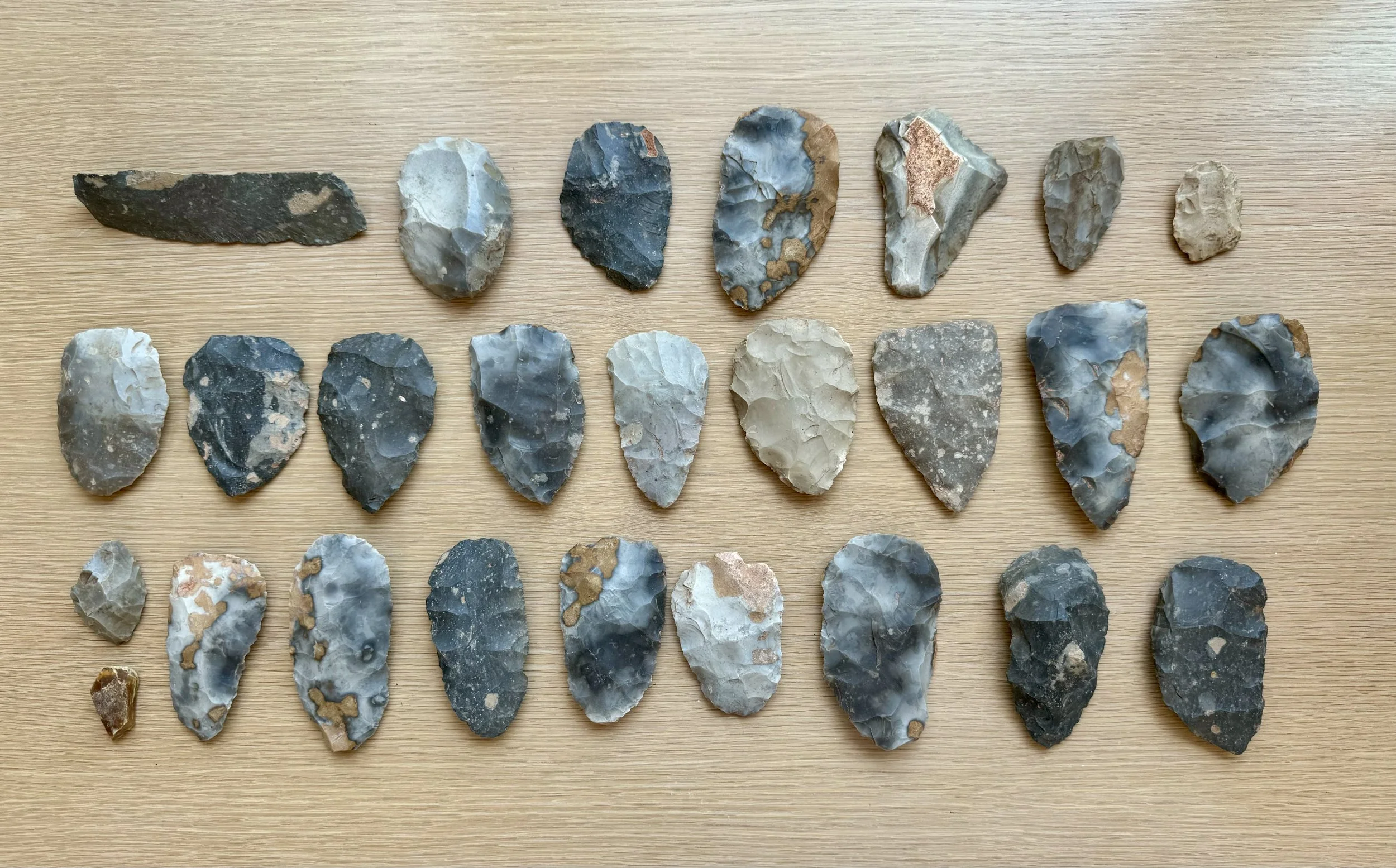
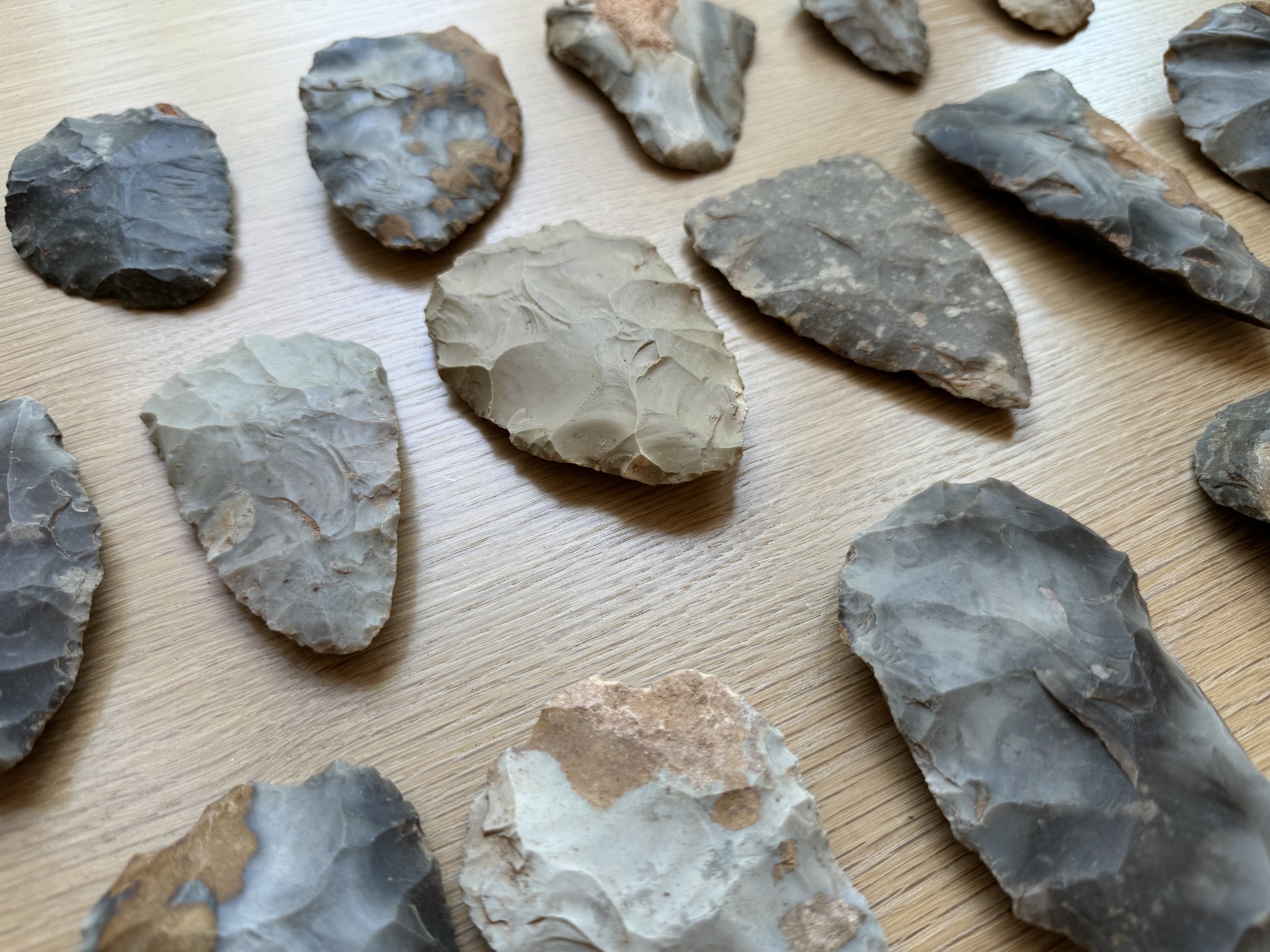
I dropped to my hands and knees and clawed out a few handfuls of soft sandy soil. And there it was, the biggest arrowhead I’d ever seen. Bigger than arrowheads could even be, I thought. Then I found another, and another. Twenty minutes or so later, I’d unearthed twenty-four unique pieces: axes, spearheads, knives, and scrapers—some fully formed, others only partial. They were shaped from a variety of colored flint: speckled, solid, smoky, copper-ish, and tan. They’d been piled right there together, about twelve inches directly beneath where my shovel had punctured the earth.
I was pleased. After all, this is what mines are for, right?
I brought the news inside to my dad and four older brothers. At first, no one believed. But upon my insistence, my family soon descended on the dig site. And when they saw that pile of axeheads—freshly mined and still dirty, yet unmistakable—their mouths dropped open. All at once, several larger shovels, picks, hammers, and other digging devices appeared, along with some of my brothers’ teenage friends. A dizzying flurry of digging ensued, while I stood nearby guarding my treasure, from time to time coolly showing a piece or two to the “big boys.” I still remember the hole they dug, and the mountain rising beside. It was impressive. But to their dismay, nothing more than red sandy dirt and a few tree roots was found.
One Monday after family dinner, after a bit of deliberation, we took the basket of treasure down to the archaeological society meeting at Baylor University.
For hundreds of years, Comanche and other Native American tribes travelled through this area, our homestead just a mile or so from the spot on the Brazos river where they frequently crossed, along with, in later times, millions of cattle headed down the Chisholm Trail. So there’s always been decent archaeological attention paid to our area.
I remember waiting patiently through all the formal discussion, led by a group of bespectacled and important-looking older folks. When the meeting finally dismissed, we approached a few members and presented our case. More soon gathered round. The room moved from delight that a boy of my age cared about archaeology, to skepticism as I told the story, to sudden shock when the evidence appeared, and then, talking all over each other, into a commotion of claims and questions. This cache was “almost certainly in the top five largest ever found in the US…” “worth up to ten million dollars, if verified…”
It was too much for my young mind to process all at once, but I was excited.
Then they asked for exact coordinates where it was discovered. When someone uttered the word “dig,” I remember my dad and grandfather glance at each other. A few moments later, my dad politely excused us, and we drove home.
We never returned to the archaeological society meeting, but I kept the prize sealed in a giant Ziploc bag among the many hunting rifles in my dad’s big fire safe. Gradually, the novelty wore off, and I pretty much forgot about them. Until a few years ago when I found them in a cabinet in my folks’ home in Idaho and moved them across the country to mine, where they are sitting in a cubby under my desk, safe and sealed, still in the ziploc. Waiting, maybe, for me to show another group of experts someday—perhaps this time with my own boys.
Was it pure coincidence that I happened to dig my mine at this exact spot? Maybe.
But there’s something about being nine years old or so, and the matter-of-fact-ness of curiosity to idea, idea to execution. I still remember laying in bed each night before sleep would come, vividly imagining businesses I’d start the next day, catalogs and logos I’d design, trails and forts I’d build in the endless ravines and trees of our backyard. And I did.
I have to wonder: today, would I still go grab a shovel from the shed and start digging in my backyard?